Wildebeest Migration
Video and all you want to know about the wildebeest migration in Masai Mara National Reserve. When and where is the wildebeest migration?

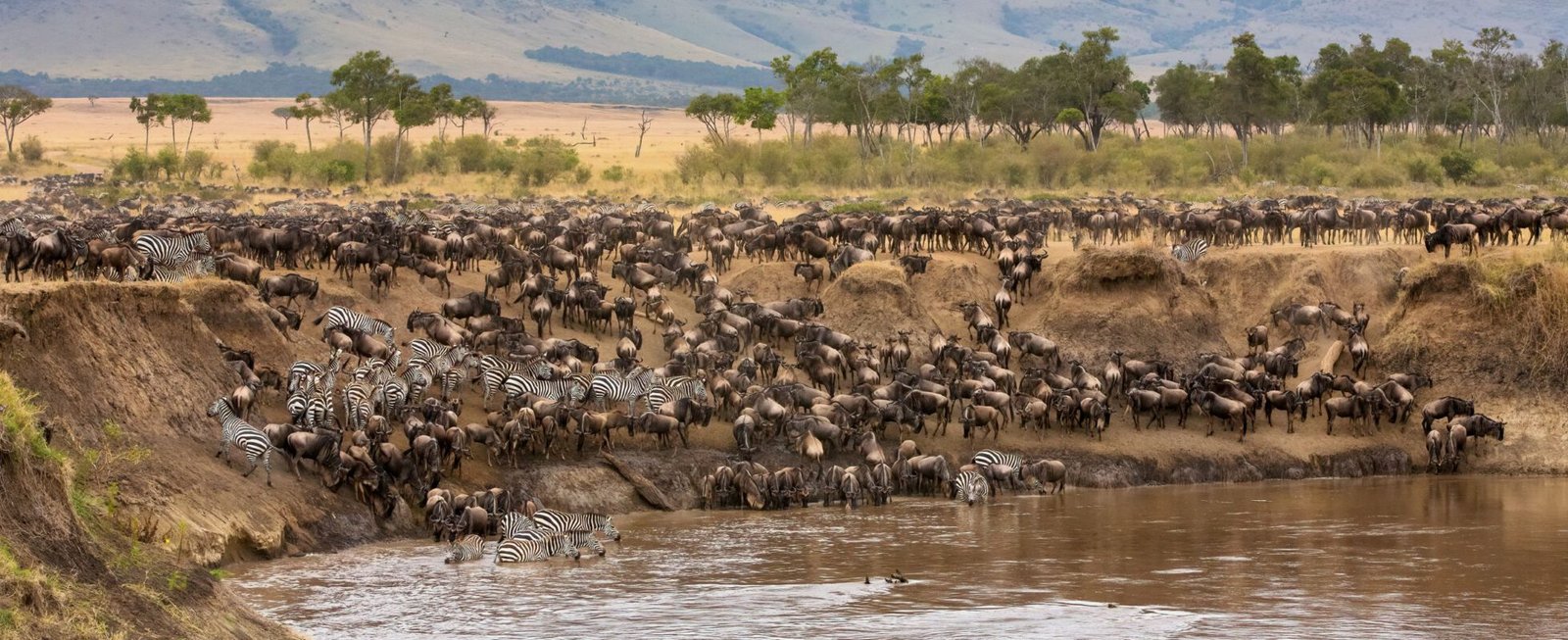
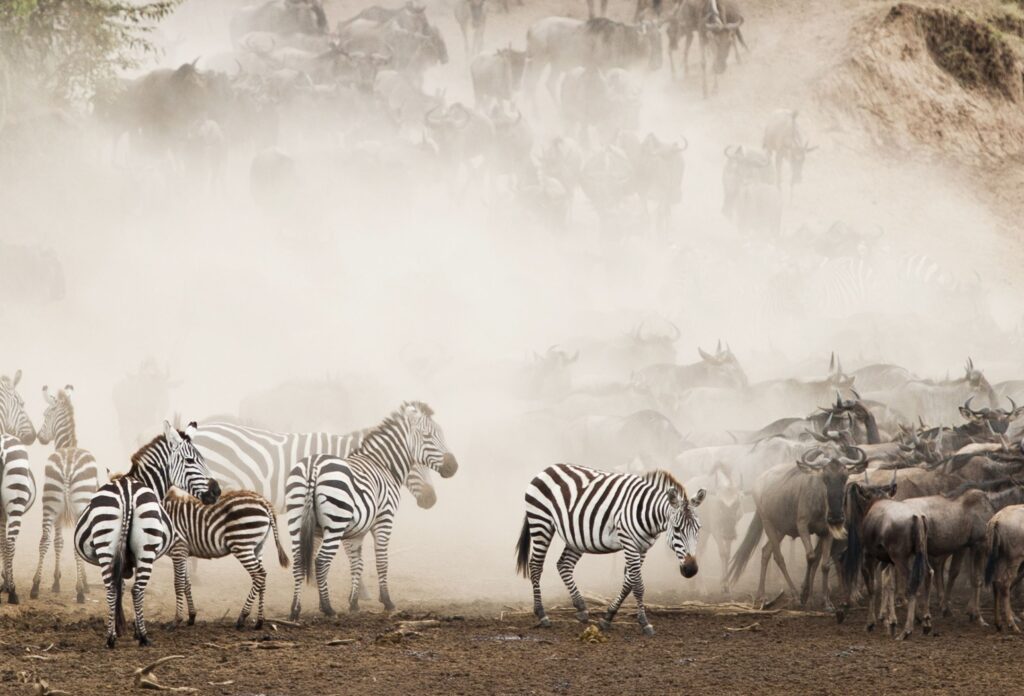
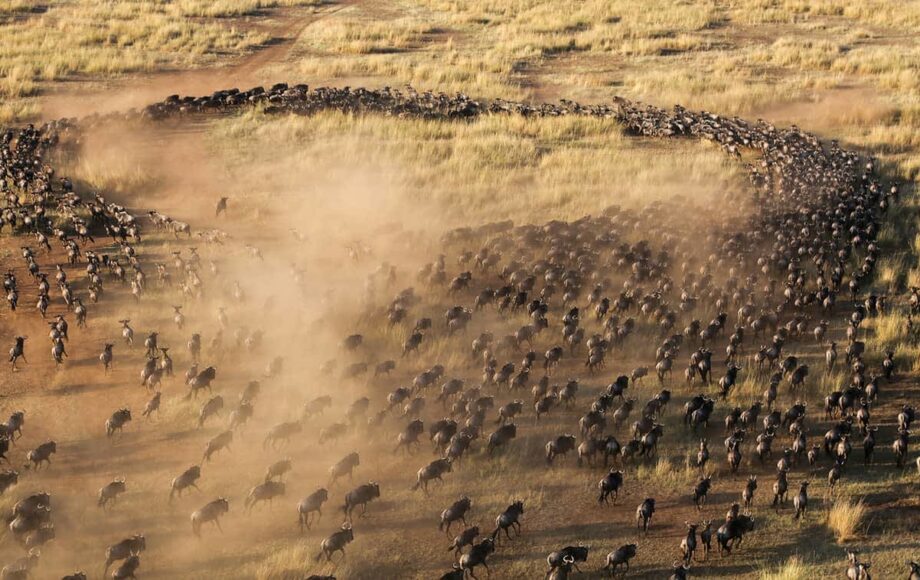
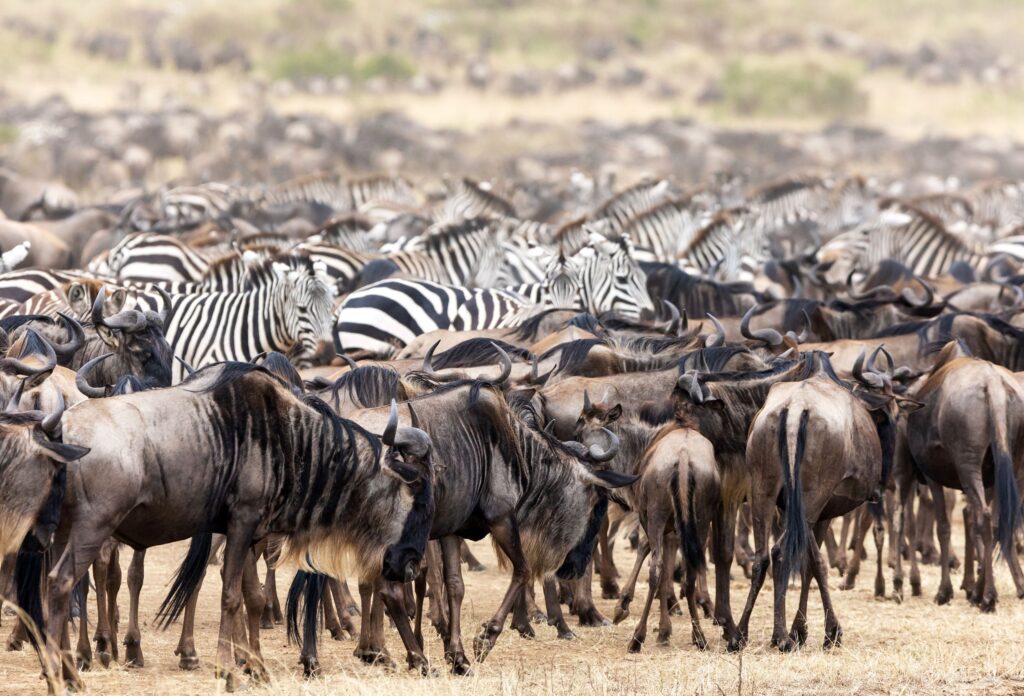
The Wildebeest migration – or Great Wildebeest Migration – is the largest mammal migration in the world. It is a true spectacle to see 1.5 million wildebeests, 400,000 zebras, 12,000 elands and 300,000 Grant’s and Thomson’s gazelles thunder across the endless plains of the Masai Mara National Reserve. Especially since the wildebeests and zebras continuously make their distinctive sounds, making the migration recognisable from great distances.
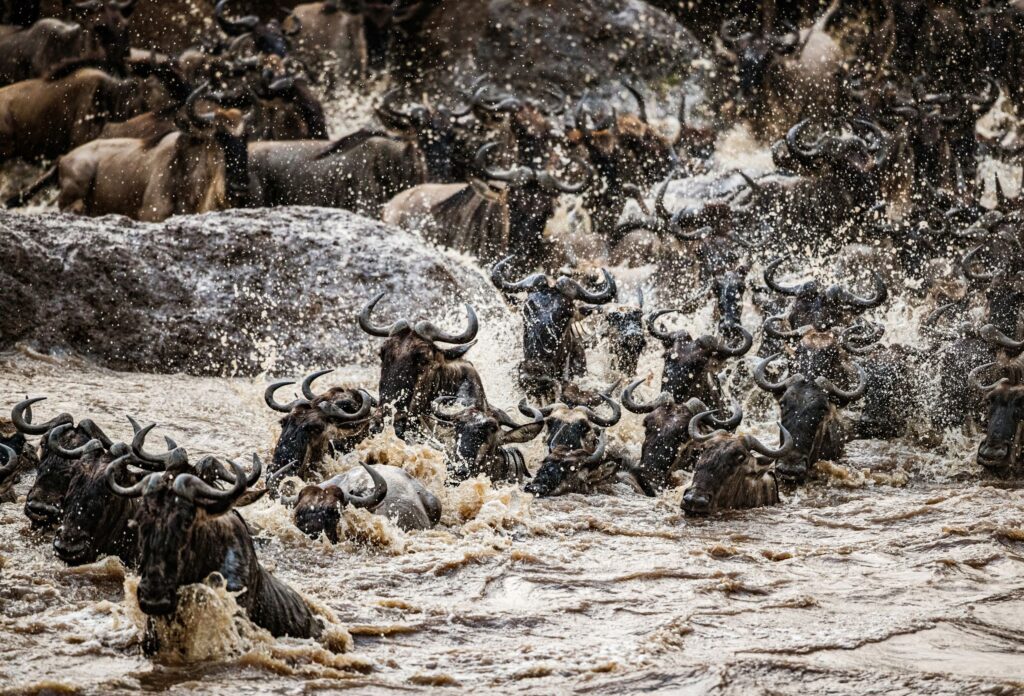
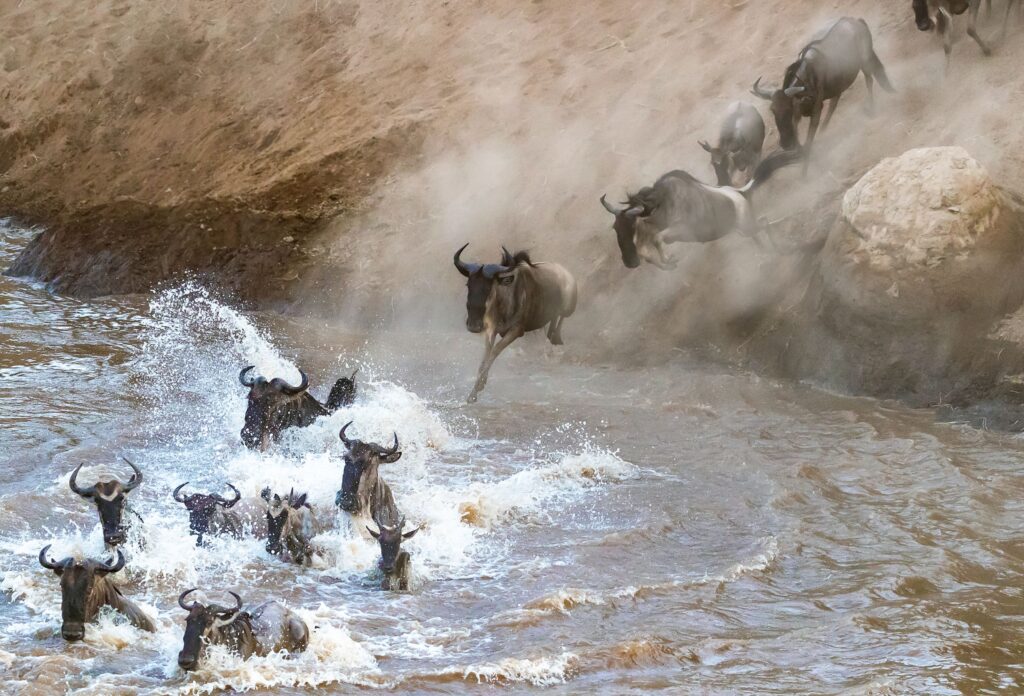
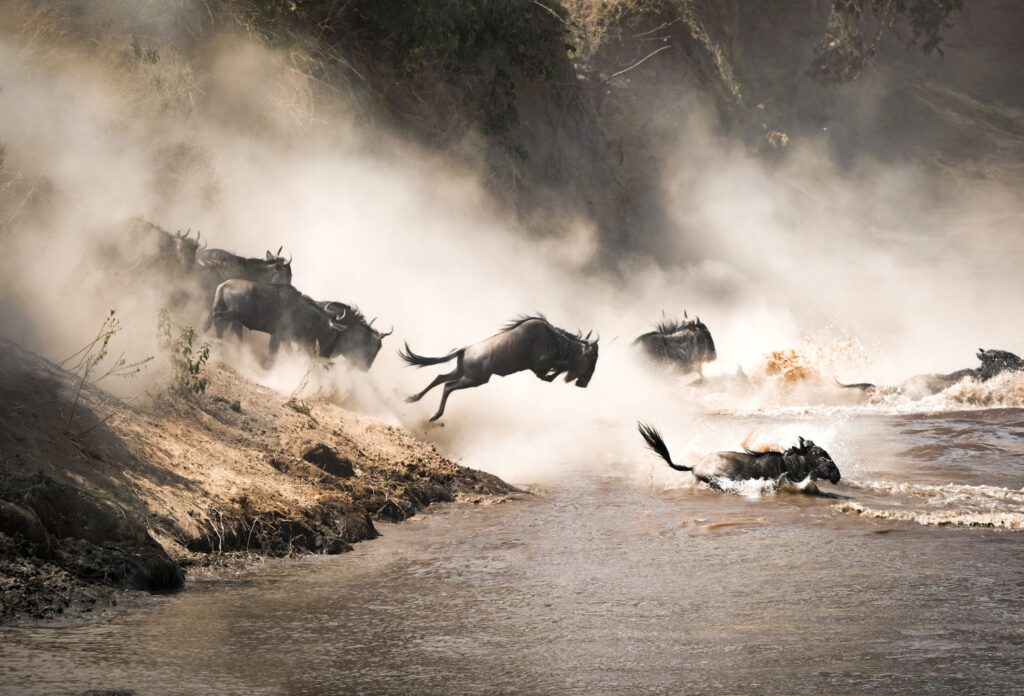
As such, the epic river crossing at the Mara River is the highlight for many travellers. It is a real feat for the herds and many animals die during the crossing. Together with crocodiles and other predators, the river causes many wildebeests and zebras to die every year.
All year migration
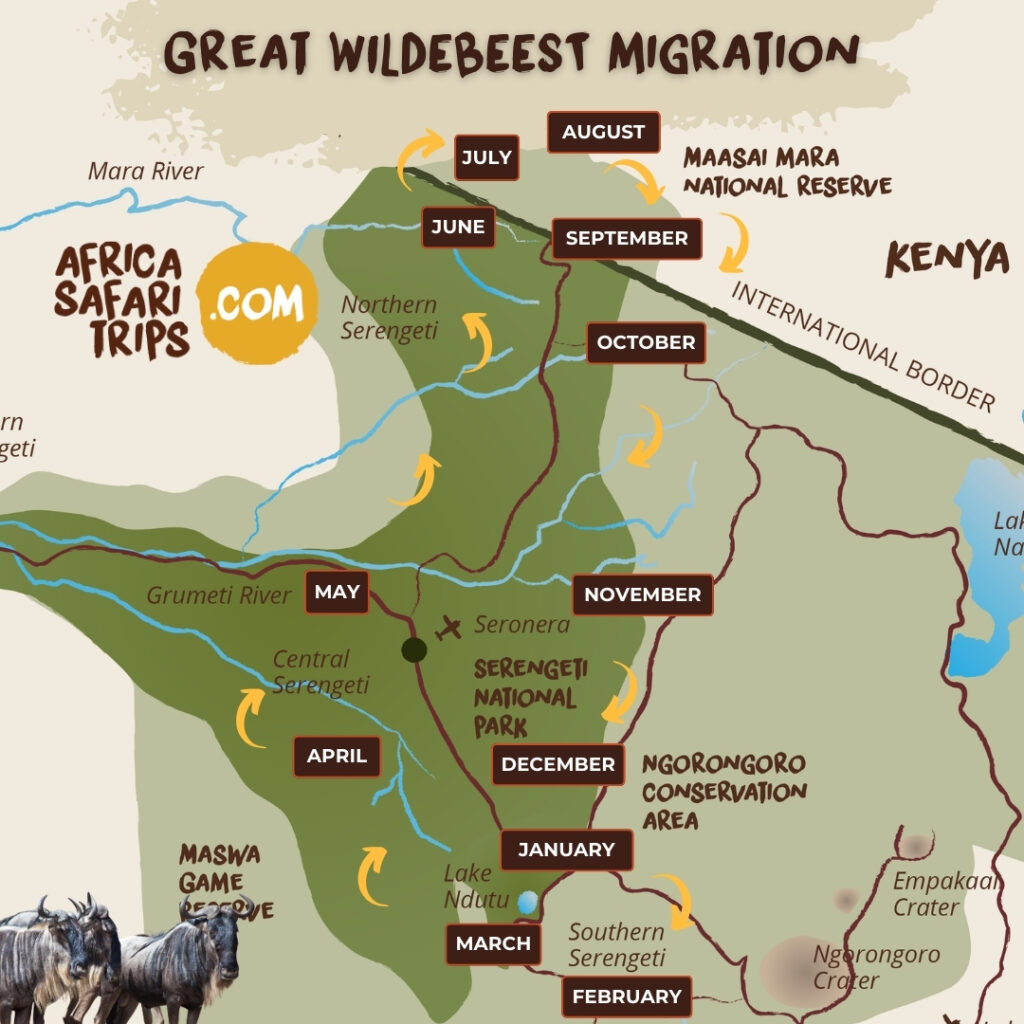
The Wildebeest Migration is a natural phenomenon that happens all year round. It starts in the southern part of the Serengeti National Park in Tanzania. Following the rains, the herds move north through the Serengeti and into Kenya’s Masai Mara. Here they stay for a few months before heading back into the Serengeti – a total distance of no less than 800 kilometers.
Great Wildebeest Migration safari itineraries
Get inspired by these wonderful itineraries and experience the wonder of the Great Wildebeest Migration.
-
Kenya
From $755 USD*4 Days Kenya: Masai Mara Exploration
-
Kenya
From $3,210 USD*14 days
The Big Five & The Beach

When to go and what to expect
If you want to observe the great wildebeest migration in Kenya, we advise you to come between July and October. The rest of the time, you can observe it on the other side of the border, in Tanzania.
July: From late July into August the herds start to arrive in Kenya. They are in search of food and water and need to cross the Mara River to reach the place where the grass is green. It makes for the best time to watch the river crossing.
August: The herds start reaching the Mara plains, but are awaited by hungry and eager packs of big cats.
September: Life is good, as most animals have reached Mara and most big cats are fed. This is the time for the herd to relax. It is also a beautiful time to be roaming the Mara plains.
October: The rains start to fall in the Masai Mara Game Reserve.
November: The Wildebeest Migration heads back to Serengeti.
Would you like to witness the Great Wildebeest Migration in Kenya? Check our Kenya Tours or contact us for personal advice.